
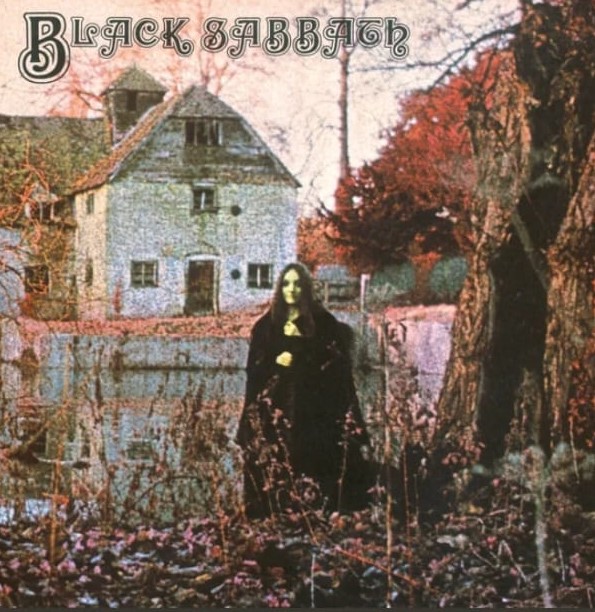
Artist: Black Sabbath
Album: Black Sabbath
Label: Vertigo (UK), Warner Bros. (US)
Released: 13 February 1970
UK Top 100 Albums: 8
US Billboard 200: 23
Produced: Rodger Bain
File Under: Rough and ready rock classic. Where heavy metal began… allegedly.
🎧 Listening Status
Where do you even begin with this one? It’s the sound of a thousand teenage bedrooms going dark. Rain, thunder, a tolling bell, and then… doom.
I’ve spun this album many a time but given Ozzy’s recent passing, as is normal in such a situation, the record is taking on new meaning.
🔎 Background
On Valentine’s Day Eve 1970, while the rest of the UK was tuning in to Engelbert Humperdinck or Top of the Pops, a bunch of brummies’ (that’s people from Birmingham, England!) emerged from the fog with something truly frightening. Something heavy. Something new.
This isn’t just the start of Black Sabbath—it’s the birth certificate of heavy metal. And while later albums (Paranoid, Master of Reality) would refine the formula, this one remains the primal scream. Murky, occult-tinged, and gloriously imperfect.
Let’s go track by track.
▶️ Track by Track
1. Black Sabbath
If you’ve never heard this before, it’s genuinely terrifying. That opening—the sound of a thunderstorm, a lone church bell ringing, and that riff. Three notes of pure menace. Based on the tritone, also known as “the Devil’s interval,” it’s probably the most important riff in heavy music history.
Ozzy wails like he’s seeing ghosts (“What is this that stands before me?”), and the band are in no rush—this thing lurks. It’s over six minutes of tension, dread, and slow-motion panic. You don’t listen to it. You survive it.
And it still sounds heavy 55 years later. Breathtaking.
2. The Wizard
Suddenly, we’re in boogie territory—but through a warped lens. Harmonica? Yep. And it works. Inspired by Gandalf from The Lord of the Rings (yes, Sabbath were Tolkien nerds too), this one is all about swagger.
Geezer Butler’s bass rolls like a drunk bar brawler, and Bill Ward’s drumming is deceptively nimble. Iommi’s riffing is tighter, punchier, less doom and more blues. You can almost hear the pub floors sticky with spilled pints.
It’s also proof that Sabbath weren’t just about slow and heavy—they could groove when they felt like it. The weird magic starts here.
3. Behind the Wall of Sleep
This is where things get a bit murky—in a good way. Based loosely on an H.P. Lovecraft short story, the lyrics nod to alternate dimensions and altered states, but the music is more mid-paced shuffle than mystical dirge.
Ozzy’s vocals here are strangely hypnotic—he sounds like he’s wandering through the track rather than driving it. Iommi lets loose a brief, searing solo around the two-minute mark, and the rhythm section keeps things moving with a sort of swampy push-and-pull.
A transitional piece, but it’s dripping with Sabbath’s early identity: creepy, bluesy, and slightly off-kilter.
4. N.I.B.
That intro bass solo from Geezer—famously titled “Basically”—is pure filth. Thick, fuzzy, and full of swagger. And then bam, in comes Iommi with one of the sleaziest, most iconic riffs of the ‘70s.
“N.I.B.” is often misinterpreted as standing for “Nativity in Black,” but it doesn’t—it was apparently a joke about drummer Bill Ward’s beard looking like a pen nib. Regardless, it sounds satanic, and that’s what counts.
Ozzy sings from the perspective of Lucifer falling in love, which somehow makes it even more unsettling. And yet, there’s an odd sweetness buried under the distortion.
Classic.
5. Evil Woman (Don’t Play Your Games with Me)
The first of two covers. Originally by US band Crow—and probably the most disposable track here. It’s not bad, just a bit… safe. Standard blues rock stuff with a slightly sinister edge, but it lacks the unique Sabbath weirdness the rest of the album has in spades.
That said, Ozzy’s delivery is sharp, and Iommi gives it some real bite. It’s fun, but inessential. It bops along quite harmlessly but deffo the weakest track here. And a weak Sabbath track (even one which isn’t their own) is better than what many are capable of producing!
6. Sleeping Village
One of the most experimental tracks on the record. It begins with an eerie acoustic intro, complete with harmonica and Ozzy sounding like he’s whispering across a foggy moor. Then, without warning, Iommi kicks in with another snarling riff, and the whole band crashes forward into a bluesy jam session.
This one’s a mood piece—part haunted folk song, part proto-stoner rock. And at just under four minutes, it’s over before you really get your bearings.
A beautiful, unsettling curveball. Unsettling and unnerving.
7. Warning
A 10-minute blues odyssey, originally by The Aynsley Dunbar Retaliation but absolutely owned by Sabbath. This is where Iommi fully lets rip—no vocals for large stretches, just pure guitar histrionics, like a man discovering what distortion can really do.
It’s not tight. It meanders. But that’s the charm. There’s something raw and honest about it, like you’re sitting in the room with them as they jam into the early hours.
It’s a bit indulgent, sure—but it’s the kind of indulgence that would soon become the blueprint for metal guitar heroics.
Iommi shines here. This was his moment.
8. Wicked Woman
To add to confusion, this track was on the US version instead of Evil Woman, and both were released together as a single. With me? No me neither!
Heavy, bluesy, and just the right amount of evil.
It’s Sabbath doing what early Sabbath did best: lumbering riffs, Ozzy wailing like he’s warning the village, and a groove that feels like it’s trudging through a swamp with purpose.
The production’s raw, and that’s half the charm. You can almost hear the amps buzzing between the chords. It’s proto-metal with a dirty blues soul — not their most iconic track, but it still thumps like a warning shot of what’s to come.
Final Thoughts
Black Sabbath isn’t perfect. It’s muddy, it’s loose, and it sounds like it was recorded in a broom cupboard. But that rawness is the whole point. There’s no polish here—just atmosphere, attitude, and an instinctive understanding that music could be something darker.
Ozzy is way out of tune at times, a young man finding his voice. That matters not one whit, the record sounds better for it. The seeds of what was to come from this astonishing ground-breaking band are truly sown.
Today, it’s stood the test of time for what it is. Naivety in music is a wonderful thing. All the more poignant now Ozzy is no longer with us.
Sabbath didn’t invent the blues, or jazz, or psychedelia—but they took all of that and made it sound like the end of the world.
This record opened the gates. And behind those gates? Metal. Doom. Stoner. Grunge. Sludge. Everything that came after.
So yeah. If you’re building a record collection worth its weight in vinyl, this one needs to be in it.
🎸 Sleeve Notes
1️⃣ It was recorded in a single day
Black Sabbath’s self-titled debut was famously recorded in just 12 hours on 16 October 1969, with most of the tracks laid down live in the studio. The band wanted to capture the raw, gritty sound of their gigs — and it worked. What you hear is basically what they played, warts and all.
2️⃣ The opening track helped invent heavy metal
The thunderstorm, the tolling bell, that eerie tritone (nicknamed “the Devil’s interval”) — all on the first track, Black Sabbath. It’s widely considered the birth cry of heavy metal, a genre that didn’t even have a name at the time. Tony Iommi’s riff was inspired by classical composer Holst but filtered through a haunted house.
3️⃣ The US version had a different track list
When the album dropped in America later in 1970, Warner Bros swapped out Evil Woman (a cover) for Wicked World, giving US fans a slightly different experience. It wasn’t uncommon at the time, but it adds to the lore — and the confusion — surrounding early Sabbath releases.
 The Listening Log
Leave a comment